Elastic OSC
The playful macro Synthesizer for Mac, Windows, iOS & Android: 24 oscillator models, 8-voice polyphony, built on Mutable Instruments Plaits DSP. An MPE-ready performance synth designed for expressive, gesture-based sound control.
About the App
Create on mobile.
Continue on desktop.
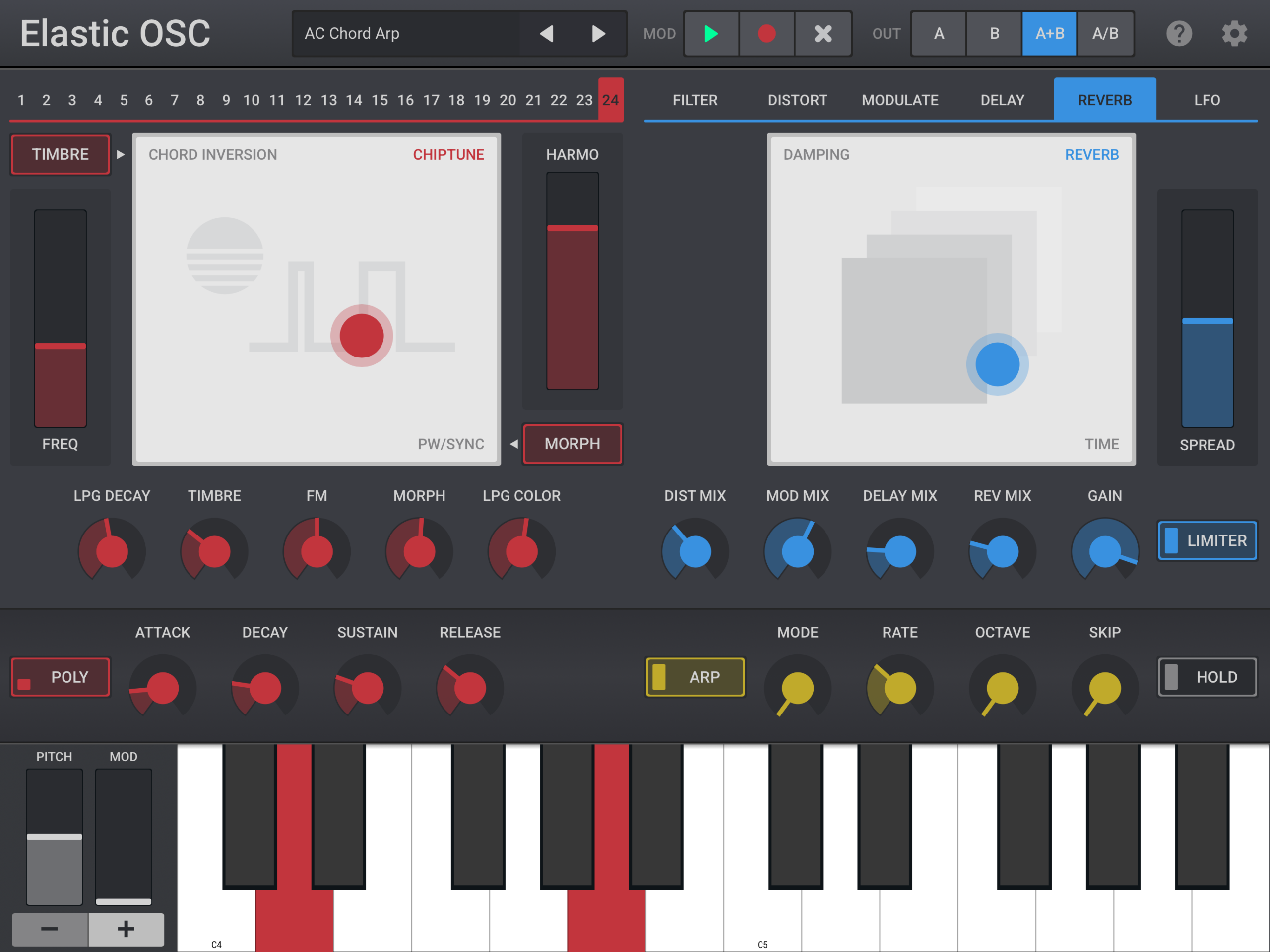
Elastic OSC is now available across all major platforms: macOS, Windows, iOS and Android. Design sounds anywhere — on your phone or tablet — then continue shaping them in your desktop workflow. One synth, every device.
An 8-voice polyphonic macro-oscillator based on Mutable Instruments Plaits, reduced to just four core parameters across all 24 oscillator models.
The four core parameters map to an expressive XY pad for fast, intuitive sound exploration. A second XY pad gives direct control over the built-in effects — immediate, playful, and fun.
The desktop version works as a plugin on Mac(AU/VST3) and PC(VST3). Tested in Ableton Live, Bitwig, Reaper, Cubase, FL Studio, and Logic Pro. MPE support and multiple LFOs are already included for free in the Desktop version.
A versatile Arpeggiator and full parameter automation make it easy to build entire sonic worlds.
Download options
39€
50€
AU / VST3 · MPE & LFOs included
macOS 10.14+ · Windows 10+

19,99€
MPE & LFOs as in-app purchases

14,99€
MPE & LFOs as in-app purchases
Watch Plaits Expert exploring Elastic OSC
Press & Reviews
What the press says about Elastic OSC

Elastic OSC becomes a must on iOS. And if that sounds like something you wish you had in your computer DAW and not just Android and iOS, now you’re in luck. Damn this sounds so good.

Takes the Mutable Instruments algorithms on a wild trip. A nearly perfect app.
The elastic engine of Elastic OSC is a lot of fun and brings new life to the famous Mutable algorithms. It inspires me every time I open it.




Videos
Intro & Demo.
Screenshots
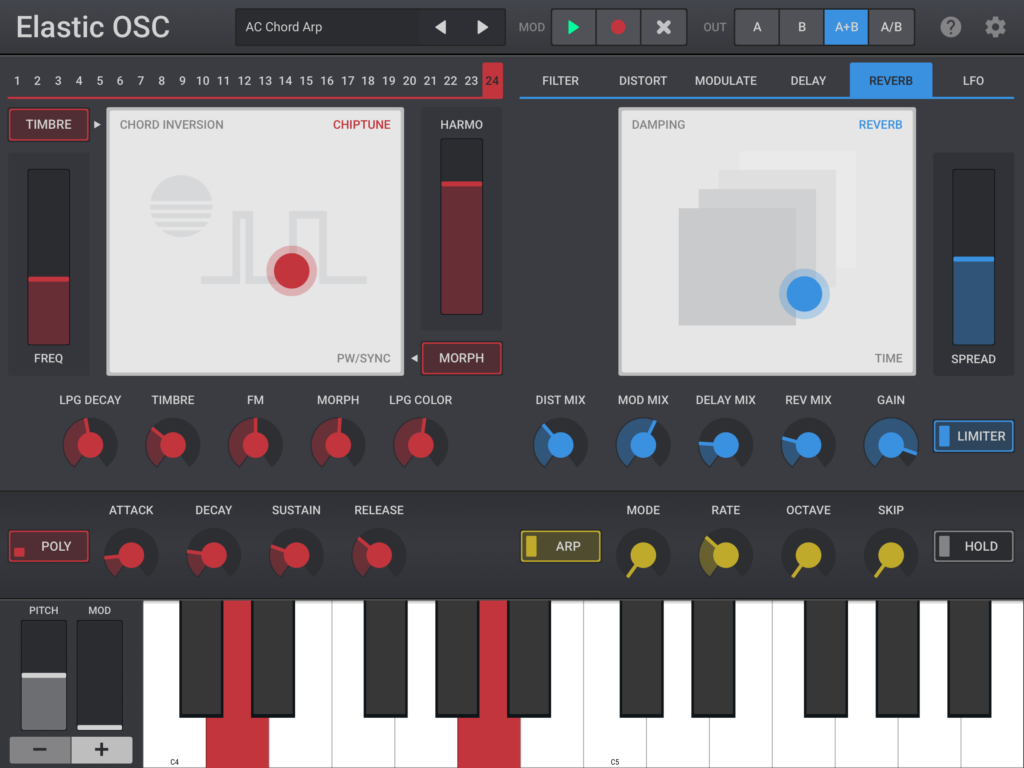
Main Screen: Simple interface. Powerful control. 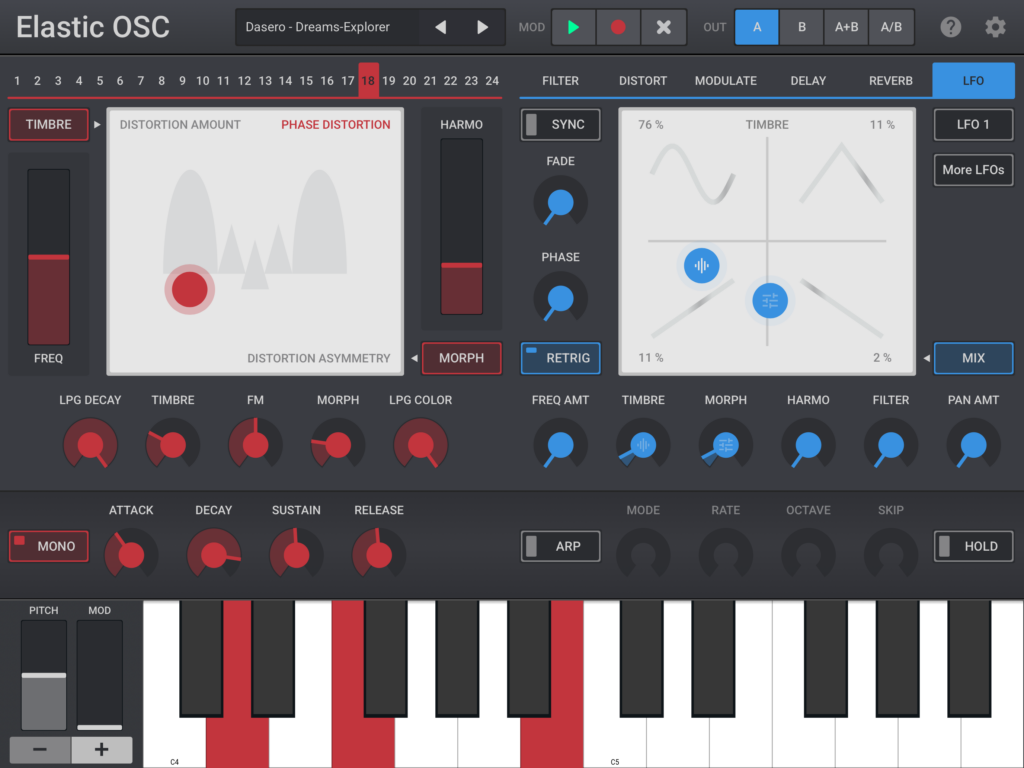
LFO Section: 4 LFOs with unique LFO mixer. 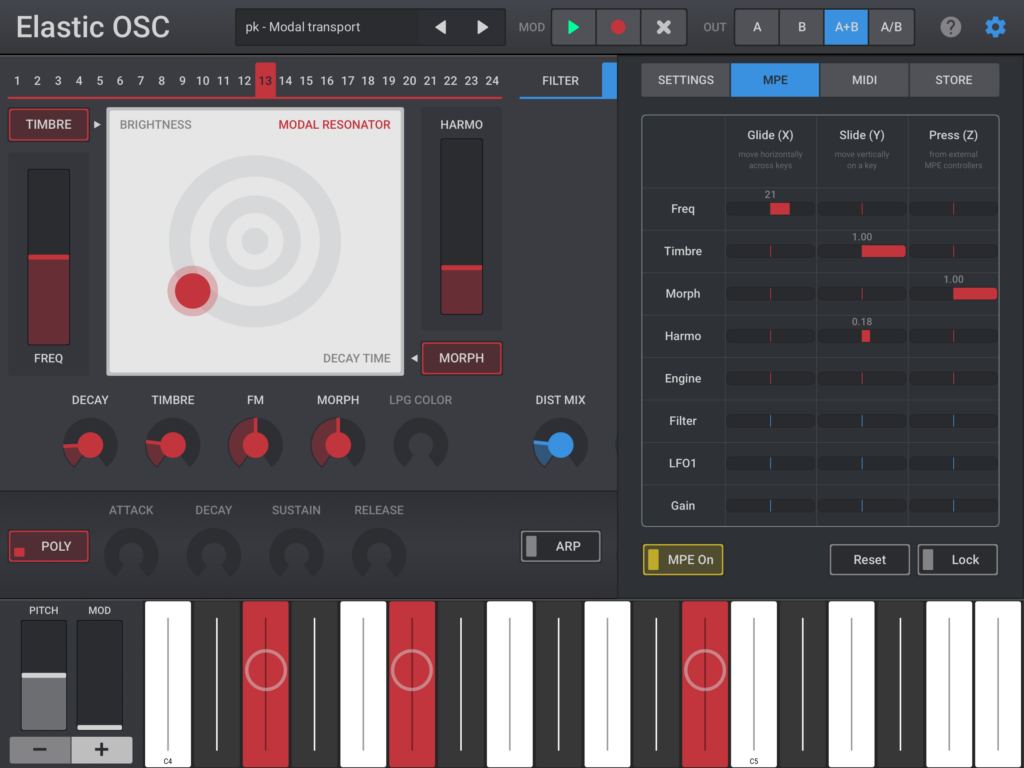
MPE section: Simple and intuitive mapping. 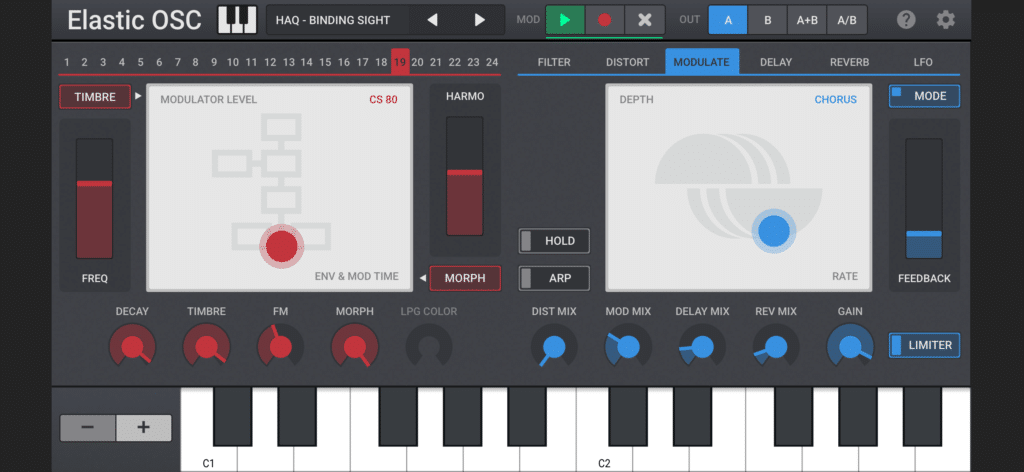
iPhone – Minimized Keys 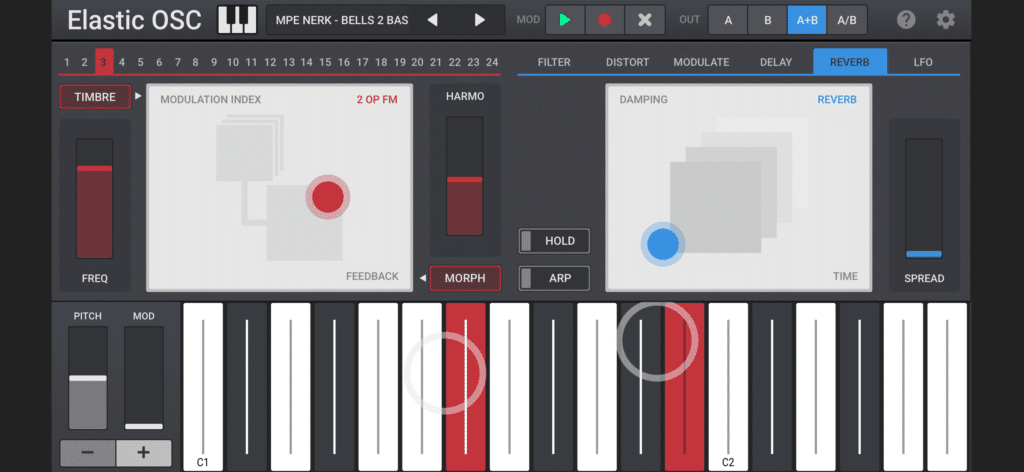
iPhone – MPE Keys 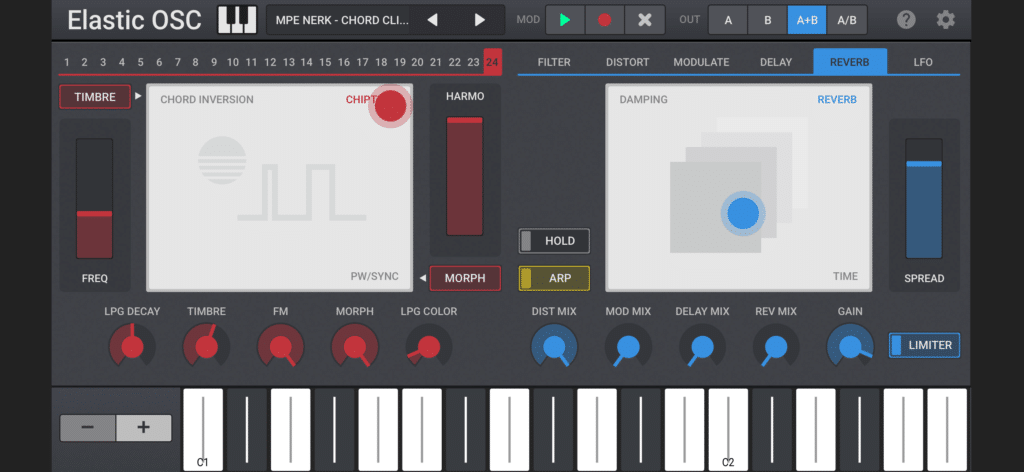
Screenshot Main Window
Press & Reviews
What people say.
AMAZONA.DE„Trotz minimalistischem UI bietet die App beeindruckenden Sound und Flexibilität für iOS-Musikmacher.“
Moogulator„Elastic OSC lässt mich als Performer sehr schnell wechseln zwischen radikal unterschiedlichen Sounds und dennoch kann ich sie sofort verändern. Radikal, mit wenigen Handgriffen.“
Robert Lippok„It’s rare to see such a coherent transfer from hardware to the iPad. Incredibly fun from the very first minute. The GUI is really well thought out. Omg, so good.“
User review Apple Store„This is absolutely the best sounding iOS synth I have ever had the privilege to experience. I am blown away — the UI, the automation, and it sounds so bubbly and warm.“
Listen
How it sounds.
Features
Everything under the hood.
MPE Update
500+ Presets
MPE — Free on Desktop, IAP on Mobile
MPE is included for free in the Desktop standalone version. On iOS and Android it’s available as an in-app purchase. Map Glide (X), Slide (Y), and Pressure (Z) to synthesis parameters — all gestures work polyphonically, each note shaping parameters independently.
Map Glide (X), Slide (Y), and Pressure (Z) to synthesis parameters — control them with external MPE controllers or the built-in keyboard. All gestures work polyphonically: each note controls parameters independently.
8 Modulation Targets
- Frequency Amount
- Timbre Amount
- Morph Amount
- Harmonics Amount
- Engine Amount
- Filter Amount
- LFO1 Amount
- Gain Amount
3 Modulation Sources
- Glide (X) — Pitchbend
- Slide (Y) — Timbre CC74
- Pressure (Z) — Aftertouch
Notes
- MPE presets included free
- Lock button preserves mapping
- Edit MPE = in-app purchase
Recognition
Best Synth 2025
Elastic OSC (iOS) made it into several Best of 2025 lists from leading music technology publications.
- Most Exciting Music Tech of 2025 – MixMag
- Best iOS AUv3 Synthesizers of 2025 – Synth Anatomy
- Top iPad Music Apps of 2025 – Gavinski’s Tutorials
- Best Music Apps of 2025 video – Jade Star
Feedback
Questions, feedback, press inquiries — just drop us a line.
Credits
Team / Legal
Development:
Oliver Greschke, Baptiste Le Goff, Lucie Gosset, Fredrik Wallberg, Valentin Ackva
Design
Gösta Wellmer
DSP
Engine sounds are derived from the open-source code of the Mutable Instruments PLAITS Eurorack module. Immense thanks to Émilie Gillet for generously sharing this beautifully crafted DSP code!
Portions of this software are derived from Mutable Instruments PLAITS,
© 2016 Émilie Gillet – licensed under the MIT License.
Get notified on new releases.
Updates on new versions, desktop release, and other Elastic Instruments apps.
No spam. Unsubscribe anytime.